
Why every business needs a process

One thing clients mention to me again and again, in reviews and in normal conversation, is how organised everything felt. How they always knew what was happening next. How nothing slipped through the cracks, even when the project got complicated along the way.
This is the result of having a clear process behind the scenes. One I’ve refined over years by managing numerous Squarespace website and visual brand identity projects for all kinds of businesses.
A strong business process isn't just admin sitting in the background. It's what makes a project feel calm and predictable for the client, even when the work itself is complex. And it's usually the difference between a business that feels chaotic to work with and one that feels genuinely easy.
What happens without a process
Picture running client projects without anything mapped out. Every project ends up looking a bit different depending on the client, the week, whatever's on your plate at the time - and it feels flexible in the moment, but really it's just solving the same problems over and over, slightly differently each time, without ever having a clear, consistent way of doing things. Pricing conversations, scope conversations, timeline conversations - you're having them fresh with every new client, instead of already knowing your own answers.
Without a process, you end up carrying every decision in your head, every single time. That's exhausting for you, and it's often confusing for the client too, even if they can't quite put their finger on why a project feels harder than it should.
Onboarding, delivery, and offboarding: the three stages worth building first
The process behind every client project I run breaks down into three main stages. Onboarding, so clients know exactly what to expect from the very first conversation. The delivery stage itself, which varies a bit depending on the type of project, but always follows the same core rhythm of milestones, feedback, and check-ins. And offboarding, so a project ends on a high note instead of fizzling out awkwardly once the final file is sent.
Within each of those three stages, there are smaller processes too - how feedback rounds work, how scope changes get handled, how handover and training happen at the end. Also, it’s important to mention the tools matter here too. At Krishna Solanki Designs, all client feedback and project tracking is managed through Asana, so nothing gets lost between emails and calls. Contracts, invoices, and proposals go out through Dubsado (affiliate link!), so there's one place for all of that admin from first enquiry to final handover.
This top-level structure is what makes everything else possible. Once those three stages are solid, the smaller details become much easier to refine - and if you're mapping out your own launch process right now, I've shared 6 essential steps to successfully launch your new website that pair well with this.
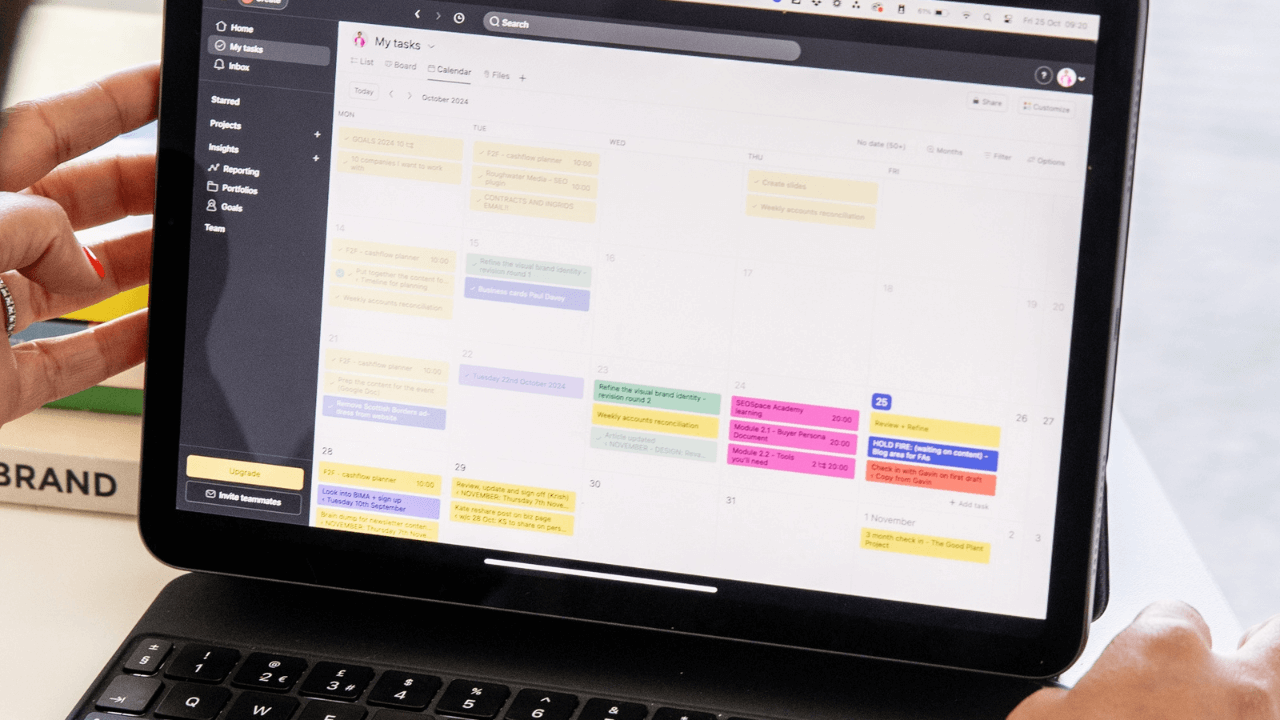
Why do clients love a process?
Clients rarely name "process" directly when they're happy with a project. What they usually say is that everything felt easy, or that they always knew what was coming next, or that nothing felt stressful even when there was a lot going on. That’s what a process does to a project.
A messy process doesn't just cost you time - it subtly affects how confident a client feels in you, even if the finished result still turns out well. Getting this right is one of the reasons projects with me tend to run smoothly, and it's something I hear about consistently from the people I work with.
've written more on this in Branding Consistency and the Client Experience, if you want to see how it works from first enquiry through to final handover.
Where this connects to my Package Your Services Course

Building out a clear, documented process - defining scope, pricing, delivery, and how you handle it all in detail - is exactly what we get into inside Module 3 of the Package Your Services Course. If you're at the point where you know you need this but aren't sure how to structure it for your own business, that's the part of the course built specifically to help you work through it.
Start with one process, not all of them
You don't need to build a perfect system overnight. Pick the stage that feels the most improvised right now - onboarding, delivery, or offboarding - and write down exactly how you'd want it to run if you were training someone else to follow it. Test it on your next project, then refine from there.
That's usually where real, lasting change in a business starts - not with a finished system, but with one process built properly at a time.
Does any of this sound familiar in your own business? I'd love to hear which stage - onboarding, delivery, or offboarding - feels the most improvised for you right now. Get in touch and let me know.




A successful launch isn’t just about pushing a button - it’s about careful planning, smart marketing, and making sure everything runs smoothly.
In this article, I share 6 essential steps to successfully launch your new website... The right way!